




How to Choose the Right Space Heater Output for Your Workshop Space
Posted by JCB Tools on 19th Jan 2026

When someone searches for “what size space heater do I need” or “how much heat output for my room”, they’re really asking:
" How do I calculate the heater output required to warm my space efficiently? "
Getting this right matters - undersized heaters struggle to bring spaces to comfort, and oversized ones waste fuel or power. In this guide, we explain how to estimate required heater output (in kW or BTU), walk through key factors to consider, and show examples using JCB Tools’ space heaters.
Why Heater Sizing Matters
Too little output: The heater runs constantly, struggles to reach set temperature, and may wear faster.
Too much output: You waste fuel (or electricity), overshoot your target temperature, and possibly cycle too often.
Correct sizing: Ensures comfort, efficiency, and longer equipment life.
Step 1: Measure your space
You need three dimensions:
Length (m)
Width (m)
Height (m)
Calculate the volume:
Volume (m³) = Length × Width × Height
For example, a 10 m × 8 m room with height 3 m has a volume of 240 m³.
Step 2: Estimate heat requirement (a rule of thumb)
For many commercial and industrial settings, a rough guideline is:
30 to 50 W per m² or ~10 W per ft² (for typical insulation)
Alternatively, use volume-based rules or heating factors (depending on insulation, climate, etc.):
Some guides use 116 W per m² adjusted by orientation, insulation and climate zone
Heat loss calculators may treat volume multiplied by a “heating factor” (depending on your climate zone)
Electric heater sizing guides often multiply area in ft² by 10 → giving watts needed
These are approximations. Always account for insulation, outside walls, window area, and temperature difference.
Step 3: Convert between units (kW ↔ BTU)
Since many industrial heaters are rated in kW or BTU/h, conversions are useful:
1 kW = 3412 BTU/h
1 W ≈ 3.41 BTU/h
Conversely, BTU ÷ 3.41 = W
For example: a heater rated at 63 kW produces ~ 63,000 × 3.41 = 215,000 BTU/h
Step 4: Factor in room conditions & heat loss
Since many industrial heaters are rated in kW or BTU/h, conversions are useful:
1 kW = 3412 BTU/h
1 W ≈ 3.41 BTU/h
Conversely, BTU ÷ 3.41 = W
For example: a heater rated at 63 kW produces ~ 63,000 × 3.41 = 215,000 BTU/h
Step 5: Match to a real heater — JCB Tools examples
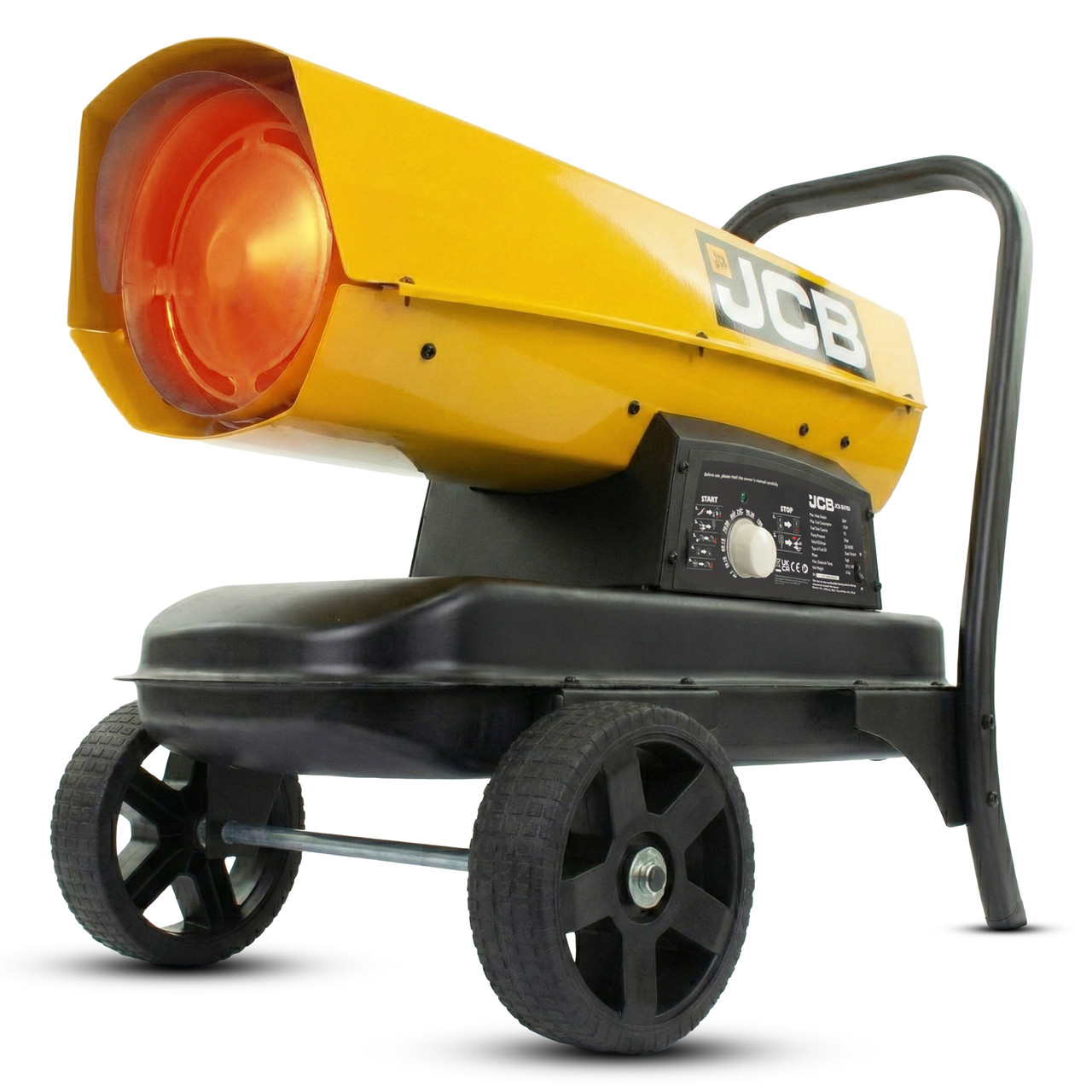
JCB Tools offers a range of heavy-duty space heaters ideal for workshops, warehouses, and industrial settings. jcb-tools.co.uk
Here are some sample models and how their specifications align with typical space sizes:

JCB Model | Output | Approx. Coverage | Notes |
|---|---|---|---|
JCB-SH70D | 20 kW / 68,243 BTU | ~496 m³ | Good for small-to-medium workshops or garages t |
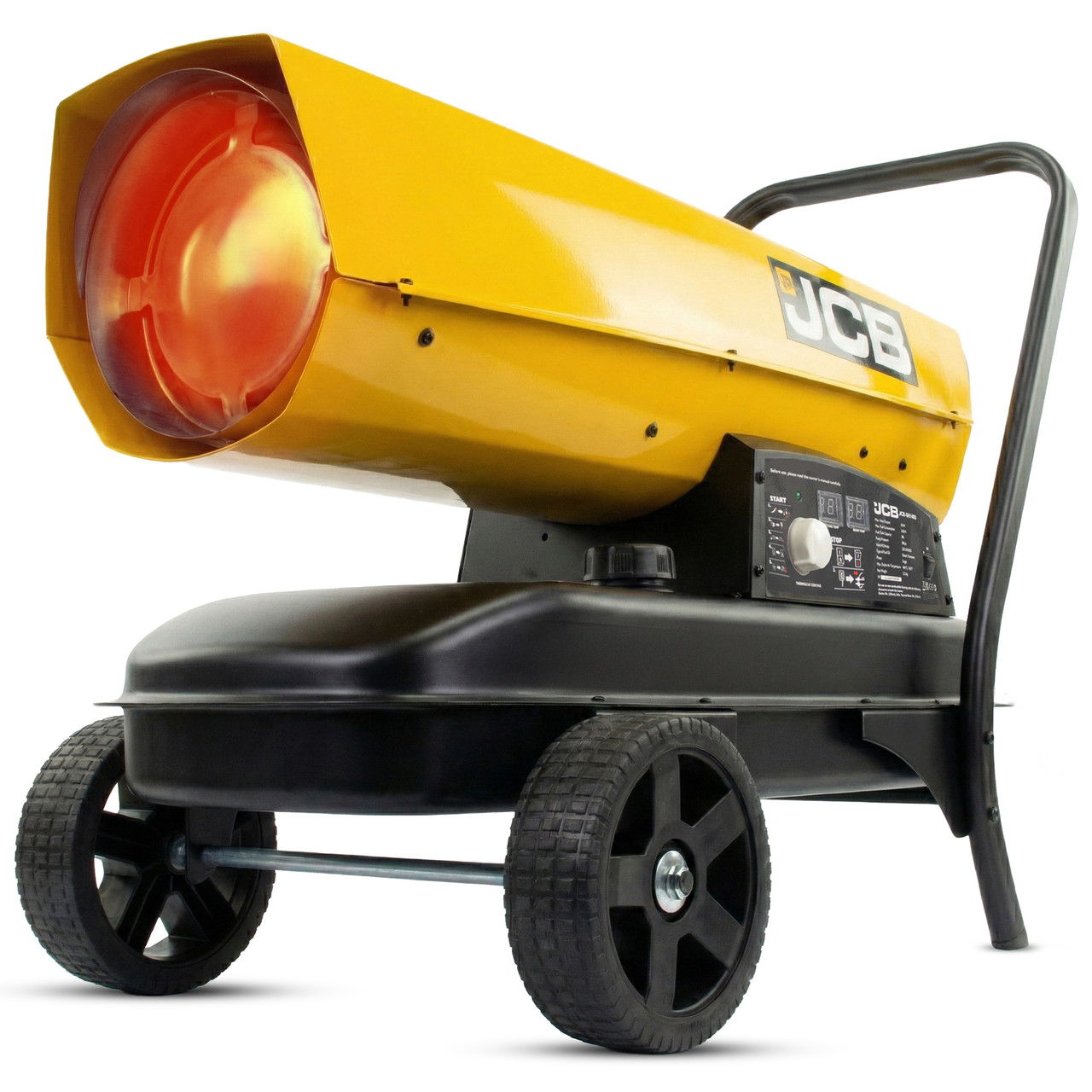
JCB-SH140D | 20 kW / 68,243 BTU | ~496 m³ | Ideal for midsize industrial areas |
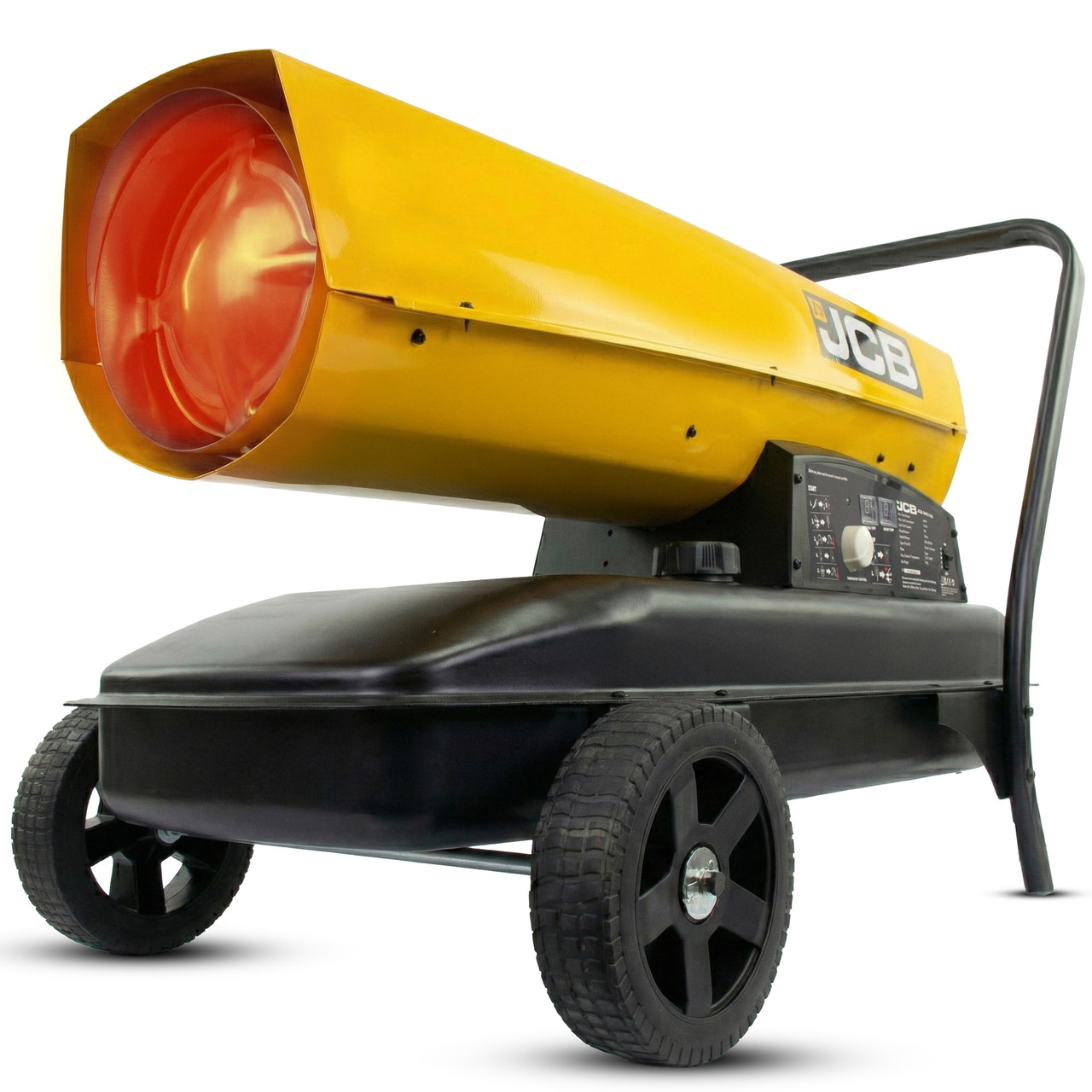
JCB-SH215D | 20 kW / 68,243 BTU | ~496 m³ | For large warehouses or production halls j |
Example use case:
You have a workshop that is 20 m long, 10 m wide, 4 m high → volume ~800 m³. Based on JCB’s spec, the JBC-SH140D is a suitable match (800 m³ coverage). But if your insulation is poor or the workshop is very open, you might consider the next size up (e.g. the 63 kW SH215D) to provide buffer and maintain comfort under load.
It’s wise to pick a heater with some margin (e.g. 10-20 % buffer) above your calculated requirement — but not vastly oversize.
Step 6: Final checks & practical advice
Thermostat & modulation: Use heaters with thermostats so they only burn as much as needed. All JCB units offer thermostatic control.
Heat direction & distribution: Use features like flame cones or directed airflow to aim heat to occupied areas. JCB models include such features.
Factor ventilation or openings: Large doors, open bays or drafts require more capacity to offset heat loss.
Safety margins: Don’t run a heater constantly at full; choose one with some headroom.
Fuel cost & efficiency: For fuel-burning heaters (diesel/kerosene), check fuel consumption per hour. The SH70D, for instance, uses ~1.9 L/hr at full output.
Maintenance & durability: Buying a slightly larger heater that runs under lighter load may extend its life.
Choosing the right approach
If your workshop is cold despite existing heating, the problem is usually capacity, heat loss, or distribution, not the idea of heating itself.
Measure room dimensions and compute volume (m³).
Use a rule-of-thumb (e.g. 30–50 W/m² or volume-based factors) to estimate required output.
Convert between watts and BTU if needed.
Adjust for insulation, openings, ceiling height, etc.
Match your estimate to real heaters — e.g. from JCB’s line (20 kW, 37 kW, 63 kW).
Leave a buffer, use thermostats, and ensure safe, efficient installation.
By following these steps, you’ll be able to choose a JCB Tools space heater that gives reliable warmth without overspending on fuel or power, and avoids underheating your space.